Blog

  • The Best Watches for Golf and Boating (2026), by Budget

    The Best Watches for Golf and Boating (2026), by Budget

    Tee Tides is reader-supported. When you buy through links on our site, we may earn a commission at no extra cost to you. Learn more.

    A good watch for this life has to do two things. It has to survive a morning of full swings and an afternoon of salt spray, and it has to look right at dinner when the sunburn is setting in. The good news: the best of them have been doing exactly that for decades, and you can start for well under a thousand dollars.

    The short answer

    For golf data, get a GPS golf watch like the Garmin Approach S70 (about $650). For the boat, the Garmin quatix 8 (about $1,200 to $1,300) is the smartest thing you can wear. For one handsome mechanical watch that does both, the Hamilton Khaki Navy Scuba (about $700) is the value pick and the Omega Seamaster Diver 300M (about $6,700) is the classic. And if you want the watch built for exactly this life, the Rolex Yacht-Master is the top-shelf answer.

    The picks at a glance

    Prices are approximate list prices and change often. Check the retailer before you buy.

    WatchBest forWater ratingPrice
    Garmin Approach S70Golf GPS, yardages, swing dataSwim-ratedAbout $650
    Hamilton Khaki Navy Scuba AutoValue mechanical for course and deck100 mAbout $695 to $745
    Garmin quatix 8Boating: boat data, tide and anchor alertsDive-rated to 40 mAbout $1,200 to $1,300
    TAG Heuer Aquaracer Professional 300Sporty Swiss diver300 mAbout $3,500 to $4,500
    Omega Seamaster Diver 300MThe classic do-everything luxury diver300 mAbout $6,700
    Rolex Yacht-Master 40The yachting icon100 mFrom about $28,000 pre-owned; $37,700 retail (Everose)

    Best golf watch: Garmin Approach S70

    Garmin’s flagship golf watch puts yardages to the front, middle and back of the green on your wrist, along with hazard alerts, detailed hole maps, swing tracking and a Virtual Caddie that suggests clubs. It looks like a smartwatch rather than a jewel, so think of it as a tool for the round, not the watch for dinner. See the Approach S70 at Garmin →

    Best boating watch: Garmin quatix 8

    The quatix line is built for the water. The quatix 8 shows depth, speed, heading and wind, gives tide and anchor-drag alerts, has tack assist and a regatta timer for sailors, and can control compatible Garmin chartplotters and Fusion audio from your wrist. It also has a built-in flashlight with a red safety light, which is handier on a night deck than you might expect. See the quatix 8 at Garmin →
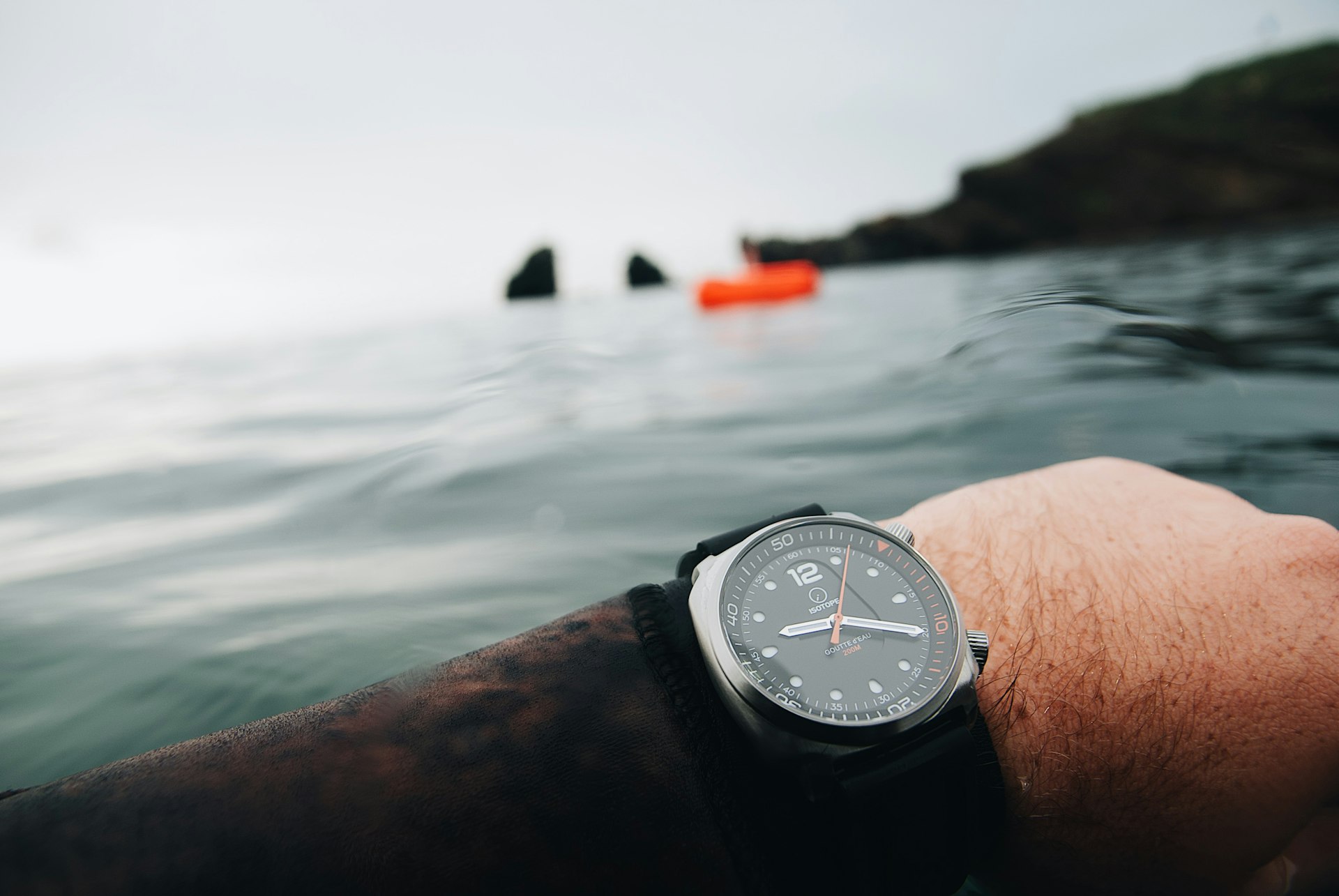
    Wrist wearing a sport watch held over open water near a rocky coast
    Cool water, a rocky point, and a watch that does not mind getting wet. This is what water resistance is for.

    Best value: Hamilton Khaki Navy Scuba Auto

    Under $750 for a Swiss automatic diver with an 80-hour power reserve and 100 meters of water resistance is hard to beat. At 40 mm it sits low and light on the wrist, which matters when you swing. Wear it on rubber for the boat and a bracelet for dinner. See the Khaki Navy Scuba Auto at Hamilton →

    The sporty Swiss pick: TAG Heuer Aquaracer Professional 300

    Bold, legible and rated to 300 meters, the Aquaracer is the watch for someone who wants a recognizable Swiss diver with a sportier edge. It handles a day on the water without a second thought. See the Aquaracer Professional 300 at TAG Heuer →

    The classic: Omega Seamaster Diver 300M

    If you buy one luxury watch to wear everywhere, this is the safe and beautiful answer. The wave-pattern dial looks made for a marina, 300 meters of water resistance covers anything you will do on vacation, and it dresses up easily. Shop the Seamaster Diver 300M on Chrono24 →

    Golf green with a flagstick at the edge of the ocean in late afternoon light
    The last green before the sea. Golf, then the water, and one watch on your wrist for both.

    Can you wear a mechanical watch while you play?

    Most watch experts say yes, with some sense. The shock from a full driver swing travels up the shaft to your wrist, and over time that can disturb a mechanical movement and send it in for service. A few habits help:

    • Choose a sports watch. A steel or titanium diver handles shock and sweat far better than a dress watch.
    • Skip soft gold and leather. Gold dents easily and sweat ruins leather. Rubber or a steel bracelet is better.
    • Keep it light and snug. A heavy or loose watch can shift during your swing and feel distracting.
    • Or switch for the round. Many golfers wear a GPS watch for the 18 holes and put the mechanical watch back on for the boat and dinner.

    FAQ

    What water resistance do I need for boating and swimming?

    For swimming and snorkeling, look for at least 100 meters. A rating of 200 or 300 meters is a comfortable margin for a dive watch you wear in the sea. Rinse it in fresh water after a salt day.

    Is a GPS golf watch allowed in competition?

    Distance-measuring devices are allowed under the Rules of Golf unless a local rule bans them, but features that suggest clubs or measure slope may not be. Check the event’s rules and switch to a tournament mode if your watch has one.

    Should I buy a luxury watch new or pre-owned?

    Pre-owned can save money and skip waitlists, especially for Rolex. Buy from a reputable dealer or a marketplace with authentication and buyer protection, and ask for the box, papers and service history.

    Rubber strap or bracelet?

    Rubber for the course and the boat, since it shrugs off sweat and salt. A steel bracelet for dinner. Most of these watches can wear both.

    Next steps

  • What to Wear on a Golf and Yacht Trip: The Complete Wardrobe (2026)

    What to Wear on a Golf and Yacht Trip: The Complete Wardrobe (2026)

    Tee Tides is reader-supported. When you buy through links on our site, we may earn a commission at no extra cost to you. Learn more.

    The morning tee time is booked. The boat leaves the marina at two. Dinner is somewhere with a view of the harbor and a wine list longer than the scorecard. The only question left is what goes in the bag, and the answer is simpler than it looks: a handful of pieces that move from the first tee to the swim platform to a candlelit table without anyone noticing you changed.

    The short answer

    Pack a tight capsule in navy, white and sand: two or three performance polos, one linen shirt, tailored shorts, swim shorts that pass for regular shorts, light trousers, a weatherproof midlayer, golf shoes, and a pair of non-marking deck shoes or loafers. A smart version costs about $900 to $1,300. A premium version runs $2,000 to $3,000. And if you want the full Riviera treatment in Italian cashmere and linen, plan on $5,000 and up.

    Golfer in light shoes walking across a sunlit green
    Late light on the back nine. Light colors, breathable fabrics, nothing that will not also look right at the marina bar.

    The ten-piece capsule

    • Two or three performance polos. Technical fabric for the round, a clean collar for the deck. White and navy are the workhorses.
    • One linen or cotton-linen shirt. Your evening piece, and the cover-up over swim shorts at lunch.
    • Tailored golf shorts. Stretch, a 7 to 9 inch inseam, and a color that matches everything.
    • Swim shorts that look like shorts. A tailored swim short with a proper waistband works from the swim platform to the beach club.
    • Light trousers or chinos. For dinner ashore and for the occasional club that does not allow shorts.
    • A weatherproof midlayer. The breeze at sea is cooler than the forecast suggests, and evenings on deck can turn chilly.
    • Golf shoes. Spikeless if you want to wear them to lunch afterward.
    • Deck shoes or soft loafers. Clean, light, non-marking soles. More on this below.
    • Polarized sunglasses. They cut glare off both the water and the green.
    • A soft duffel. Crews prefer soft-sided bags that fold away; hard suitcases are awkward to store on board.

    Picks by budget

    Prices are approximate and change with the season and sales. Check the retailer before you buy.

    PieceSmartPremiumTop shelf
    PoloTravisMathew, Johnnie-O or Southern Tide, about $90 to $115G/FORE, about $175 to $225Loro Piana at MR PORTER, about $525 to $900 in cotton or linen
    Swim shortsSouthern Tide, about $100 (often on sale for less)Vilebrequin, about $285 to $400Orlebar Brown Bulldog at MR PORTER, about $395 to $445
    MidlayerSouthern Tide or Johnnie-O quarter-zip, about $125 to $150Helly Hansen Crew Midlayer jacket, about $185Loro Piana or Brunello Cucinelli knit, $1,500 and up
    Deck shoesSperry Authentic Original, about $100 to $110Leather deck shoe or driving moc, about $200 to $350Loro Piana suede loafers at MR PORTER, about $1,150 to $1,250
    Golf shoesSpikeless performance shoe, about $100 to $150G/FORE, about $200 to $300G/FORE limited editions and leather styles, $300 and up

    Shop the picks: Southern Tide polos → · Johnnie-O polos → · TravisMathew polos → · G/FORE → · Orlebar Brown at MR PORTER → · Vilebrequin at MR PORTER → · Helly Hansen Crew Midlayer → · Sperry Authentic Original →

    On the course

    Most private and resort clubs still expect a collared shirt and tailored shorts or trousers, so the polo stays your anchor. Choose a technical knit that dries fast; you may go from the 18th green straight to the tender. Keep the palette quiet. A white polo with navy shorts looks right at Pebble Beach, in Cabo and on the back of a Sunseeker.

    On deck

    This is where most first-timers get it wrong. Many yachts ask guests to go barefoot or wear only clean, non-marking soles on board, because hard soles and grit can scratch teak and gloss finishes, and wet decks are slippery. Golf shoes never come aboard. Bring a pair of deck shoes you only wear on the boat, and expect to leave them in a basket by the passerelle as often as not.

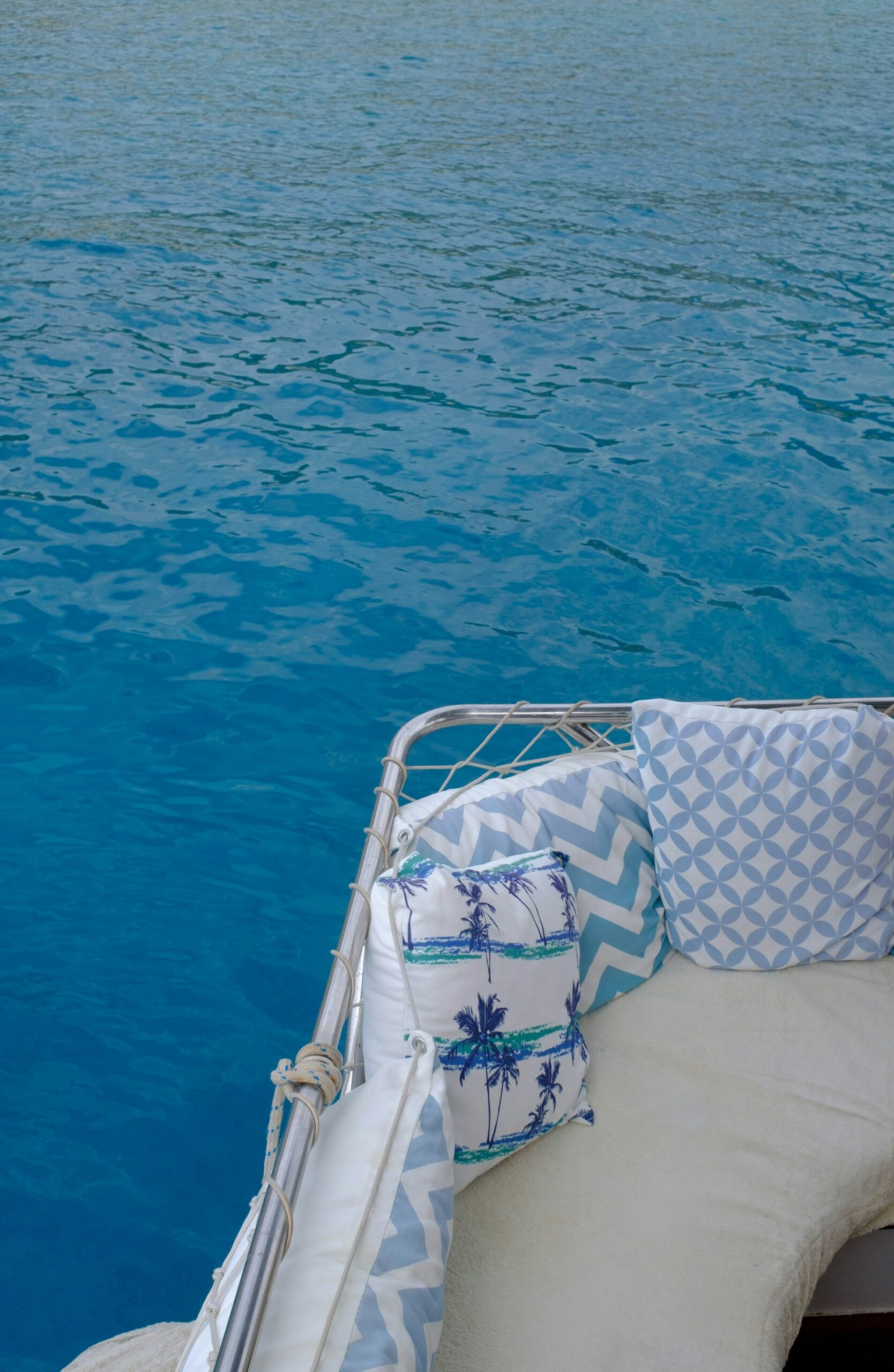
    Cushioned yacht deck overlooking bright blue water
    The afternoon plan: shoes off, swim shorts on, and water so clear you can count the ripples on the sand below.

    For the day itself, swim shorts and a linen shirt cover almost everything. Add the midlayer when the boat picks up speed or the sun drops. If you are new to chartering, our first yacht charter guide covers the rest of the onboard etiquette.

    Evenings ashore

    Linen shirt, light trousers, soft loafers, no socks. That is the uniform from Saint-Tropez to Nantucket, and it is forgiving: a little wrinkled linen reads as relaxed rather than careless. If the dinner is at a club, carry a light knit in place of a blazer.

    FAQ

    Can I wear golf shoes on a yacht?

    No. Spikes and hard rubber soles can mark teak and gloss finishes. Change into deck shoes or go barefoot before you board, and keep the golf shoes in a shoe bag.

    Do I need a jacket for a summer charter?

    Bring one light, weatherproof midlayer. Wind on the water makes it feel cooler than the forecast, especially at speed and after sunset.

    What kind of luggage should I bring?

    A soft duffel. Storage on board is tight, and soft bags fold away where hard cases will not.

    What colors work best for golf and boating?

    Navy, white, sand and soft blues or greens. Everything mixes, light colors stay cool in the sun, and the whole bag works with fewer pieces.

    Next steps

  • Your First Yacht Charter: A Step-by-Step Guide

    Your First Yacht Charter: A Step-by-Step Guide

    Tee Tides is reader-supported. When you book through links on this page, we may earn a commission at no extra cost to you.

    Booking your first yacht charter comes down to seven steps: pick the type of charter, choose where and when, set an all-in budget, find the yacht through a broker or booking site, sign the contract and pay, fill out your preference sheet, and pack light. Start three to six months ahead, and closer to a year for the most popular yachts and peak weeks.

    Step 1: Choose the type of charter

    TypeWhat it meansChoose it if
    BareboatYou rent the boat and sail it yourselfYou hold a sailing qualification and want the lowest price
    SkipperedA hired skipper runs the boat; you handle meals and the restYou want to relax but keep costs moderate
    CrewedCaptain, chef and crew handle everythingYou want a true vacation with nothing to manage

    For a first charter, most people are happiest on a skippered or crewed yacht. See what each one costs in our yacht charter cost guide.

    Step 2: Pick your destination and season

    • Mediterranean (Greece, Croatia, the French Riviera, Italy): best from May to October. June and September offer good weather, fewer crowds and better rates.
    • Caribbean (the British Virgin Islands, the Bahamas): best in the winter months, when the Mediterranean season is over.
    • Avoid school holidays and Christmas week if you want better prices and availability.

    Step 3: Set an all-in budget

    On a crewed charter, the advertised weekly rate covers the yacht and crew. Add an Advance Provisioning Allowance (APA) and taxes of roughly 25% to 50% of the charter fee for fuel, food, drinks, dockage and local taxes, plus a crew tip of 10% to 15%. Set a per-person budget first, then choose the boat to fit it.

    Step 4: Find the yacht

    • A charter broker is the easiest route for a crewed yacht. You describe your group and the trip you want, and the broker shortlists yachts by size, layout, availability and crew, then plans an itinerary with the captain.
    • A booking platform like Boatbookings or Yachting.com lets you compare bareboat, skippered and crewed yachts by destination and price. Compare yachts and prices at Boatbookings →
    • Want a trial run? A half-day or full-day charter is an easy way to test your sea legs before committing to a week. Find a half-day or full-day charter on GetMyBoat →

    Step 5: Sign the contract and pay

    • Crewed charters are usually booked on the MYBA charter agreement, the industry-standard contract.
    • Expect a 50% deposit when you sign, with the balance and the APA typically due about a month before departure.
    • Ask your broker exactly which taxes apply to your dates and destination before you sign.
    • Buy travel insurance that specifically covers yacht charters.
    Breakfast on deck with a view of the sea and cliffs
    Tell the chef how you like your mornings.

    Step 6: Fill out your preference sheet

    A few weeks before the trip, you will get a preference sheet. This is where you tell the captain and chef about allergies, favorite foods and drinks, things you dislike, and the activities you care about, from snorkeling to a tee time ashore. The more detail you give, the better the week.

    Step 7: Pack and go

    • Pack in soft bags. Hard suitcases are hard to stow on a boat.
    • Bring: reef-safe sunscreen, polarized sunglasses, a light layer for evenings, boat-friendly shoes and any medication you need.
    • Leave room for golf clubs in a travel bag if your itinerary includes a round ashore.
    • At the end, you get an itemized APA statement and a refund of anything unspent. Hand the crew tip to the captain on the last day.

    FAQ

    How far in advance should I book a yacht charter?

    Three to six months ahead at minimum. For peak summer weeks or a specific yacht, book six months to a year out.

    Do I need a license to charter a yacht?

    Only for a bareboat charter, where you skipper the boat yourself. Skippered and crewed charters need no qualification at all.

    What is a preference sheet?

    A form you fill out before the trip that tells the captain and chef what you like to eat and drink and what you want to do, so the yacht is stocked and planned around you.

    Next steps

  • How Much Does a Yacht Charter Cost? Bareboat vs. Skippered vs. Crewed (2026)

    How Much Does a Yacht Charter Cost? Bareboat vs. Skippered vs. Crewed (2026)

    Tee Tides is reader-supported. When you book through links on this page, we may earn a commission at no extra cost to you.

    A week-long yacht charter costs anywhere from about €2,000 for a bareboat sailboat you skipper yourself to €30,000–€300,000+ for a fully crewed yacht, and superyachts can pass $1 million a week. For crewed charters, the advertised price is not the final price: plan on adding roughly 35% to 65% for running costs, taxes and the crew tip.

    Here is what each type of charter costs, what is included, and how to budget so there are no surprises.

    Cost by charter type

    Charter typeTypical weekly base priceWho runs the boatBest for
    Bareboat€2,000–€10,000You (sailing qualification required)Experienced sailors on a budget
    Skippered€5,000–€20,000A hired skipper; you handle the restGroups who want to relax without a full crew
    Crewed€30,000–€300,000+Captain, chef and crewFull-service luxury
    Superyacht (Ultra-luxury)$100,000 to $1 million+Large professional crewOnce-in-a-lifetime trips and big celebrations

    Price ranges from HELM and YachtWay. Size, destination and season move the price more than anything else.

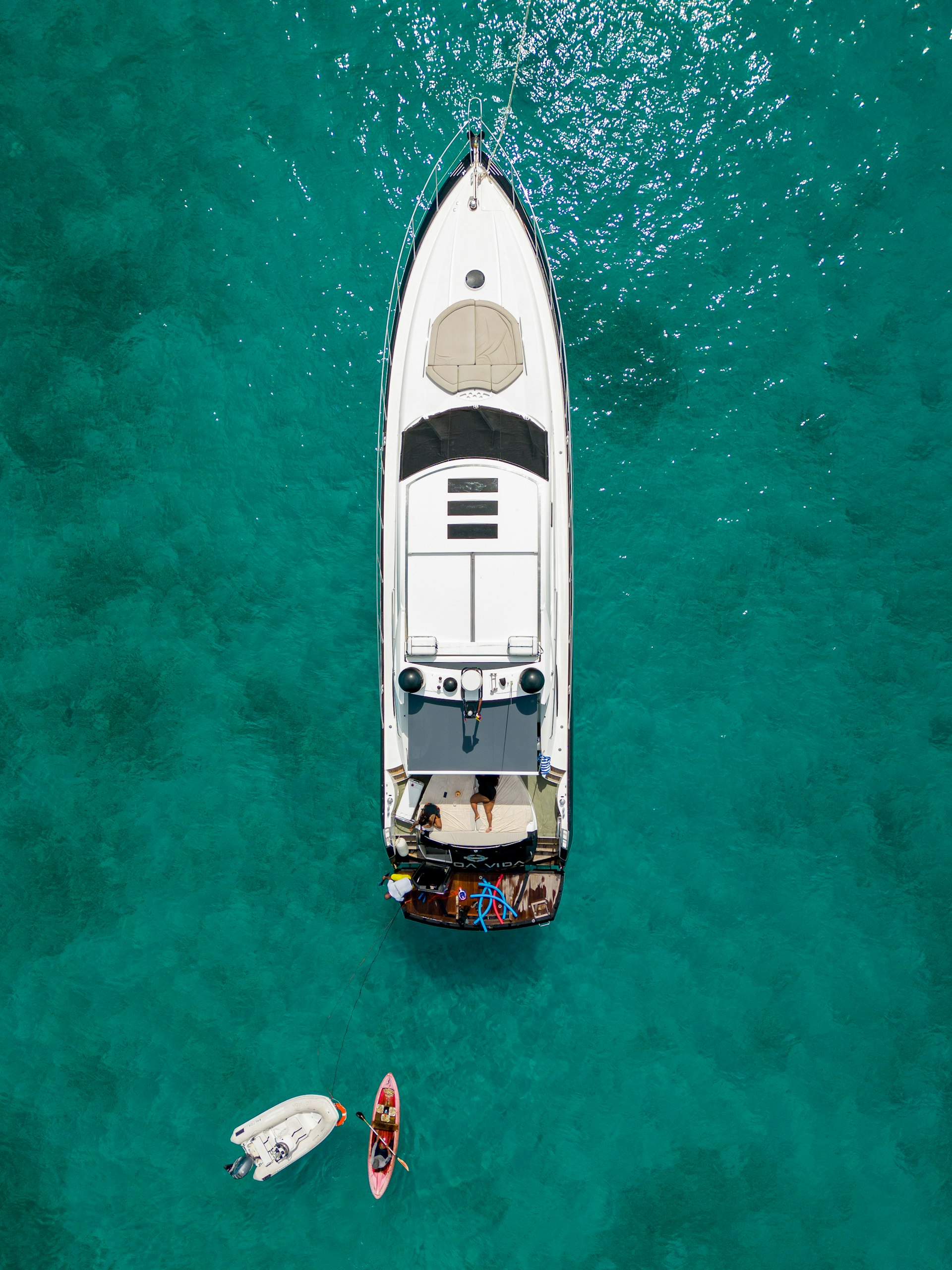
    Aerial view of a luxury yacht on turquoise water
    Clear water, and no schedule but yours.

    What the base price covers, and what it does not

    On a crewed charter, the base price covers the yacht and the crew. Most everything else is paid separately:

    • APA (Advance Provisioning Allowance). A float you pay before the trip. The captain uses it for fuel, food and drink, dockage and other running costs, gives you an itemized statement and refunds whatever is left.
    • Taxes. VAT or charter tax depends on the country and is often charged on the base price.
    • Crew gratuity. Typically starts at 10% of the charter fee, and many guests give 15% or more for excellent service.

    As a rule of thumb, brokers advise budgeting 25% to 50% of the charter fee for those running expenses, plus the tip (Northrop & Johnson).

    A sample crewed budget

    Here is how a $50,000-a-week crewed yacht adds up:

    Line itemLowHigh
    Base charter fee$50,000$50,000
    Running costs and taxes (25%–50%)$12,500$25,000
    Crew gratuity (10%–15%)$5,000$7,500
    Estimated total$67,500$82,500

    Extra costs on a bareboat charter

    • Damage deposit: about €3,000 held on a credit card; deposit insurance can cut that to around €500.
    • Final cleaning: €80–€250.
    • Mooring: about €300 a week in Croatia and €400 in Italy; often only a few euros a night in Greece and Turkey.
    • Small extras: outboard engine €80–€120 a week, Wi-Fi about €30 a week, linens and towels, park fees and local tourist taxes.

    How to save on a yacht charter

    • Go in shoulder season. June and September in the Mediterranean bring good weather, fewer crowds and better rates.
    • Avoid school holidays and Christmas, especially in the Caribbean.
    • Anchor out. Dropping anchor in a bay and taking the dinghy to town avoids marina fees.
    • Set a per-person budget first, then pick the boat type and size to fit it.
    • Buy travel insurance that specifically covers sailing.

    FAQ

    What is the cheapest way to charter a yacht?

    A bareboat sailboat or catamaran you skipper yourself, starting around €2,000 a week. You need a sailing qualification. If you do not have one, a skippered charter is the next step up.

    How much should I tip the crew?

    Plan on 10% to 15% of the charter fee, given to the captain at the end of the trip to share with the crew.

    Is APA refundable?

    Yes. The captain tracks every expense, and any unused APA is returned at the end of the charter.

    Next steps

  • The Best Home Golf Simulators of 2026, by Budget

    The Best Home Golf Simulators of 2026, by Budget

    Tee Tides is reader-supported. When you buy through links on this page, we may earn a commission at no extra cost to you.

    The best home golf simulator for most golfers is a Garmin Approach R50 package (about $7,200–$7,700) if you want it simple, or a Foresight GC3 package ($10,099.99 regular, $7,099.99 on sale in October 2026) if you want tour-grade data with no subscription. If money is no object, the Trackman iO is the one the pros use, at roughly $17,700 to $31,000 for a full setup.

    Below are our picks at each budget, what each one is best at, and the trade-offs. Prices are complete simulator packages from The Indoor Golf Shop unless noted, and they change with frequent sales.

    Our picks at a glance

    PickBudgetPackage priceBest for
    SkyTrak ST MAX SIG10Entry$5,145 regular ($3,999.99 on sale in October 2026)A first real simulator for less
    Garmin Approach R50 SIG10Mid$7,199.99 sale ($7,699.99 regular), projector extraPlug-and-play: no PC needed
    Foresight GC3 SIG10Upper$10,099.99 regular ($7,099.99 on sale in October 2026)Serious players who want accuracy and no subscription
    Trackman iO SIG10 (Elite Pick)No limit$17,689.99–$20,999.99 Home; $27,689.99–$30,999.99 CompleteThe best tracking in the game, mounted out of sight

    Best entry-level simulator: SkyTrak ST MAX SIG10 package

    $5,145 regular, and $3,999.99 on sale in October 2026. The package pairs the SkyTrak ST MAX launch monitor, which replaced the SkyTrak+, with the SIG10 enclosure, impact screen, turf and hitting mat. Check whether a projector is included in the version you choose.

    • Why we like it: the most affordable way to get a full-size, projector-and-screen simulator that plays real courses.
    • Watch out for: the free Basic plan is limited, and paid plans run $129.99 to $599.99 a year, and you will want a PC for third-party software like GSPro.

    See the SkyTrak ST MAX SIG10 package at The Indoor Golf Shop →

    Best all-in-one: Garmin Approach R50 SIG10 package

    $7,199.99 on sale ($7,699.99 regular) with the 5-by-5-foot hitting mat. The projector is not included, so budget for one if you do not own one.

    • Why we like it: the R50 has a built-in screen and runs its own simulation software, so there is no gaming PC to buy or manage.
    • Software: a Garmin Golf membership is $99 a year and unlocks more than 43,000 courses.
    • Watch out for: you need roughly 9 feet of ceiling, and more for a tall swing.

    See the Garmin R50 SIG10 package at The Indoor Golf Shop →

    Best for serious players: Foresight GC3 SIG10 package

    $10,099.99 regular, and $7,099.99 during the $3,000-off GC3 sale running in October 2026. That sale makes it one of the best values in the lineup while it lasts.

    • Why we like it: tour-level ball and club data from three high-speed cameras, with no yearly subscription for the core software.
    • Long-term math: cheaper monitors with a $499-a-year plan catch up to the GC3 in about nine years, so it pays off if you keep it.
    • Watch out for: GSPro or E6 course play still needs a capable Windows PC.

    See the Foresight GC3 SIG10 package at The Indoor Golf Shop →

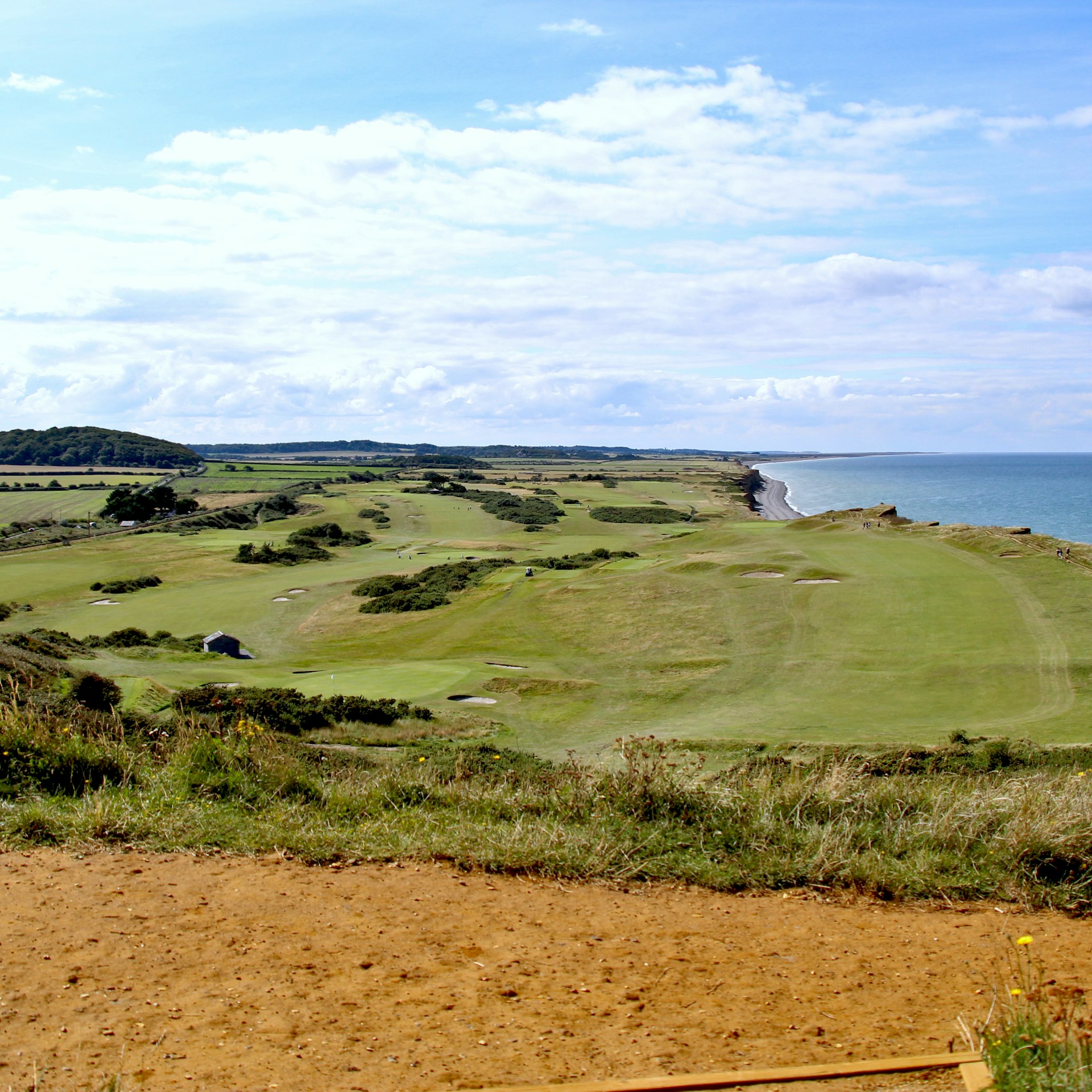
    Coastal links golf course beside the ocean
    The courses you dream about, one swing away.

    How to choose

    • Measure first. Most full setups want about 9 feet of ceiling, a bay roughly 11 feet wide and room behind the hitter.
    • Decide on a PC. If you do not want one, the Garmin R50 runs on its own. Most others use a Windows PC for the best course software.
    • Count the subscriptions. Add five years of software fees to the sticker price before comparing.
    • Buy a package. Bundles usually cost less than the same parts bought separately, and the pieces are matched to fit.

    Want the full cost breakdown, including room prep and hidden costs? Read how much a home golf simulator really costs.

    FAQ

    What is the best golf simulator for the money?

    For most golfers, the Garmin R50 package gives the best experience per dollar because it skips the PC. While the GC3 sale lasts, the Foresight GC3 package is the standout deal. If you play weekly and plan to keep it for years, the Foresight GC3 is the better long-term value.

    What do the pros use?

    Trackman is the standard on tour and at many club fitters, which is why it is our Elite Pick.

    Do these packages include a projector?

    It depends. The SIG10 studio package includes one; the Garmin R50 and Trackman iO packages list the projector as an add-on. Check before you order.

    Next steps

  • How Much Does a Home Golf Simulator Cost? (2026 Price Guide)

    How Much Does a Home Golf Simulator Cost? (2026 Price Guide)

    Tee Tides is reader-supported. When you buy through links on this page, we may earn a commission at no extra cost to you.

    A real home golf simulator, meaning a launch monitor, impact screen, projector and hitting mat, costs about $5,000 to $15,000 for most golfers. Premium builds with overhead tracking and custom rooms run $25,000 and up.

    The sticker price is only part of it. Software subscriptions, a capable PC and room prep can add thousands more. This guide breaks down every piece so you can budget before you buy, not after.

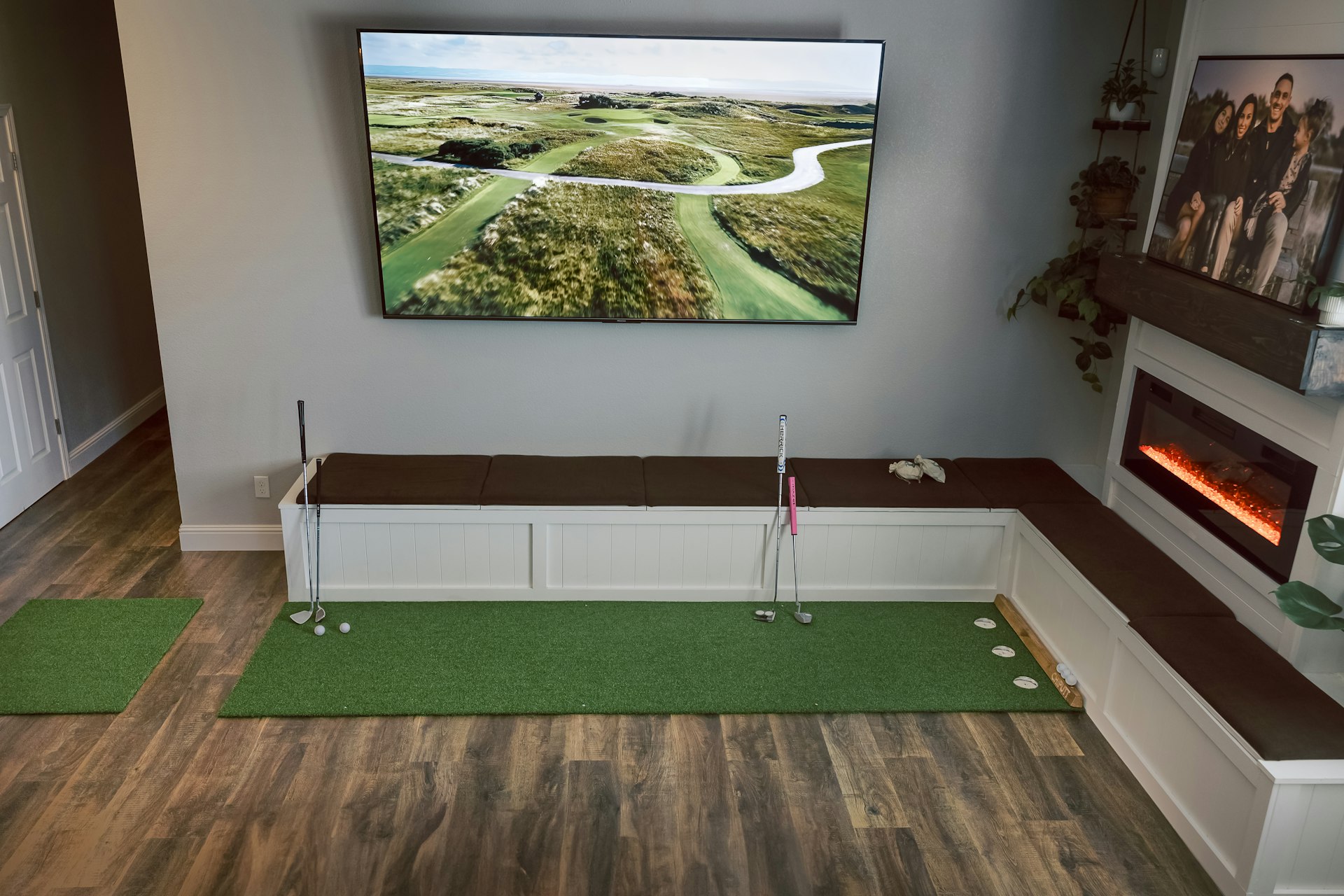
    Home golf room with a putting green and a course on screen
    Your own course, open all year.

    What your budget buys

    Most of the price difference comes from the launch monitor, the device that reads each shot. Everything else scales with how polished you want the room to feel.

    BudgetWhat you getExample buildBest for
    About $5,000–$7,500Camera launch monitor, enclosure, impact screen, projector, matSkyTrak ST MAX or Uneekor EYE MINI Lite (about $2,000–$3,000) plus a SIG10 studio package (about $3,400–$4,250)A first full simulator in a garage or basement
    About $8,000–$15,000Tour-grade ball and club data, no software subscription, a better PCForesight GC3 SIG10 package ($10,099.99 regular; $7,099.99 on sale in October 2026) plus a gaming PCSerious players who practice weekly
    $25,000+Overhead tracking, larger screen, finished room, professional installUneekor EYE XO (about $6,500–$8,000) or a Foresight GCQuad SIG10 package (about $17,800–$20,150) plus build-outA finished entertainment room the family and guests use

    Want something smaller? A Garmin Approach R10 (about $500–$600) with a net and mat makes a practice setup under $2,000, but it is not a full simulator experience.

    Cost by component

    If you build piece by piece instead of buying a package, here is where the money goes.

    Launch monitor: $500 to $8,000+

    This is the brain of the setup and usually the biggest line item.

    Launch monitorPriceYearly subscriptionNotes
    Garmin Approach R10about $500–$600optionalPortable radar; good for practice, less precise indoors
    SkyTrak ST MAX$2,995 list (often on sale; $1,695 in October 2026)$129.99–$599.99 for full featuresReplaced the SkyTrak+; popular first-simulator pick
    Uneekor EYE MINI Lite$2,750 list ($1,999 on sale in October 2026)$199+ for the Pro tierStrong pick for a permanent home bay
    Bushnell Launch Proabout $2,500–$3,500$199–$499Same camera hardware as the Foresight GC3
    Garmin Approach R50$4,999.99about $99 (optional)Built-in screen and simulator; no PC needed
    Foresight GC3$6,999 list ($3,999 on sale in October 2026)nonePay once, full data for life
    Uneekor EYE XO$7,999 list ($6,499 on sale in October 2026)$199+Overhead mount, nothing on the floor

    The subscription matters. A Bushnell Launch Pro on the $499 Gold plan costs about the same as a GC3 after roughly nine years, so the cheaper sticker is not always the cheaper choice.

    Enclosure, screen, mat and projector: $3,500 to $6,000

    The Indoor Golf Shop’s SIG10 studio package bundles an enclosure, impact screen, turf, hitting mat, a 5,000-lumen projector and cables for about $3,700 to $4,250 regular, depending on the hitting mat ($3,400 to $3,950 on sale in October 2026), or about $6,600 with full simulator flooring. See the SIG10 Studio package at The Indoor Golf Shop →

    Simulator software: $0 to $600 a year

    • GSPro: about $250 a year; the favorite for realistic course play
    • E6 Connect: roughly $300 to $600 a year, depending on the tier
    • Built-in software: Garmin R50 and Foresight units include their own

    Gaming PC: $0 to $2,500

    GSPro and E6 run on a Windows PC with a capable graphics card. Skip this cost with an all-in-one like the Garmin R50.

    The costs people forget

    • Ceiling height. Plan for about 9 feet of clearance to swing a driver comfortably. A raised hitting mat eats into that.
    • Room prep. Flooring, lighting that will not wash out the projector, an outlet near the ceiling mount and climate control in a garage. Get local quotes; this varies most from home to home.
    • Installation. Packages ship in several boxes over weeks. Many owners self-install in a weekend; pro installation adds cost but saves the headache.
    • Subscriptions over time. $250 to $600 a year for software, plus any launch monitor plan, adds up to $2,500 to $5,000 over five years.
    • Extras. A putting add-on, better seating, a second screen for stats and spare balls.

    Where to spend and where to save

    Spend on:

    • The launch monitor. Accuracy is the experience. A great screen cannot fix bad shot data.
    • The impact screen. A cheap screen bounces balls back and wears out fast.

    Save on:

    • The projector. A solid short-throw model does the job; you do not need the top of the line.
    • Bundles. Packages usually cost less than buying the same parts separately.
    • Timing. Retailers run their biggest simulator sales in late summer and around the holidays.
    • Subscriptions. If you will keep the system for years, a pay-once monitor like the Foresight GC3 can beat a cheaper unit with a yearly plan. See the Foresight GC3 SIG10 package at The Indoor Golf Shop →

    FAQ

    What is the cheapest real golf simulator?

    About $5,000 (less during sales) gets a camera-based launch monitor and a full enclosure with projector. Below that, you are buying a practice setup, not a simulator.

    Do I need a computer?

    Only for PC software like GSPro or E6 Connect. All-in-one units like the Garmin R50 run on their own.

    How much room do I need?

    Plan for roughly 9 feet of ceiling height and a bay about 10 feet wide. The ceiling-height and room-prep notes above cover the essentials.

    Is a home simulator worth it?

    If you would use it weekly, it often beats paying for indoor bay time, and the whole household gets to use it.

    Next steps